Your support is needed.
An Open Letter to the SciFan™ Community
August 16, 2017
 Leave a Comment » |
  Uncategorized |
  Permalink
 Posted by Stan Faryna
Strategy for #Zombie Authors
July 31, 2017by Stan Faryna

…
This may or may not be part of a series of blog posts about online personal branding for authors (not just Zombie authors) that desire to be known. If it is, this is the second blog post in the series. The first is here:
https://stanfaryna.blog/2017/07/27/why-did-you-publish-a-zombie-book
…
Online Strategy
Online Strategy
…
Social media marketing is a long term strategy unless you have serious ad and marketing spend at the ready. Even if you have a million dollar war chest for online advertising and marketing, the results are still not guaranteed. I’d like to tell you all about a 500 Million dollar TV campaign that produced no trackable and no visible results but then I’d be violating a confidentiality agreement.
A reasonably successful social media marketing strategy requires you to build enthusiastic and supportive relationships with other human beings on social media – especially with those persons who are themselves obviously exercising a smart social media marketing strategy. Don’t spend time, attention and interest on the curious and fickle. Most likely, they won’t be around in six months in continuation of the mutual support and benefit that is critical to your getting known.
Of course, there is nothing wrong with being helpful and kind. In fact, I encourage reasonable exercises of those things just for the sake of character and growing you.
Long term and long tail
According to best-selling author Mark Schaefer, getting known takes anywhere from two to five years. I would round that up to three to ten years. If you are discouraged by Mark’s or my assessment, stop wasting your time on the sand castles. You could use all those hours of curious and half-hearted experiments for better purposes: loving on family and friends, reading better books, and writing better books, for example.
Practical tricks and tips
This section is an interruption of the business plan that I want to explain to you. But I imagine it is necessary because who doesn’t want a glimpse at the how to’s of effective strategy?!
Most Author-related FB posts and Twitter Tweets are poorly designed direct marketing prompts for a sale that is unlikely to happen; they too often present like the untrustworthy slogans and barks of a used car salesman in a cheap suit. I make that mistake, myself, when I’m pressed for time, a deadline, coming short on milestones or didn’t plan the week/month strategy.
If I make the same mistake twice in the same week and on the same channel – it actually means I’m losing the hard won credibility that I have worked so hard to build. Don’t do this.
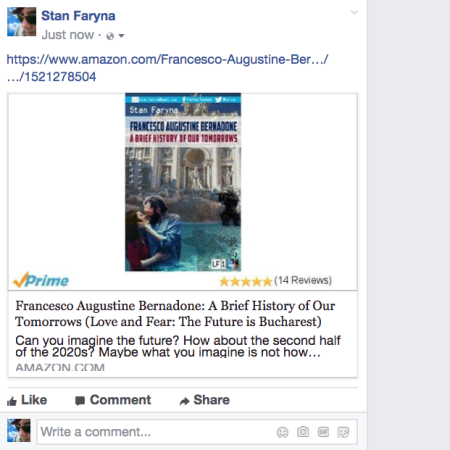
Here’s what a bad selling post looks like. Please don’t ask, expect or encourage people to share a post that looks like this. It’s just really bad mojo for everyone.
…
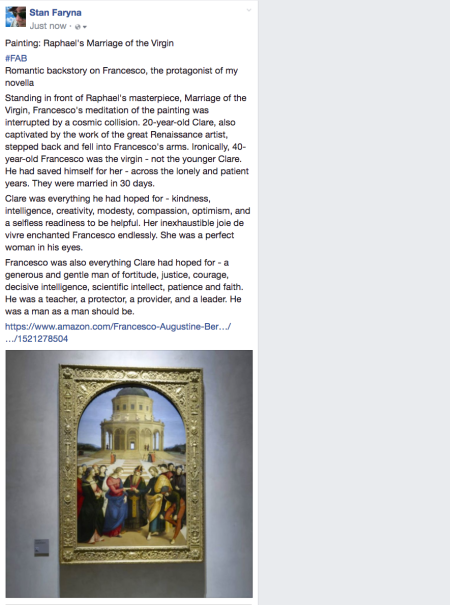
Here’s what a better designed selling post looks like. But still, I can’t use/recycle this particular post more than twice a month without my feed looking spammy.
…
Here’s another. Do notice, however, that even these better ads don’t get much traction in terms of likes, shares and comments.
Here’s another. Do notice, however, that even these better ads don’t get much traction in terms of likes, shares and comments.

…
Do try to relate to actual persons OR allow them to relate to you through your subject matter and comments. This is the effective course of action to take. One powerful way to relate to an author is by posting encouraging Amazon and Good Reads reviews of their books AND posting those reviews to your social media.
 Here’s another.

…
Here’s an example of a poorly designed, generic post that authors can “relate” with. Still, it was shared 118 times without me having to personally ask people to share it. Memes can do some serious lifting but don’t go overboard.

…
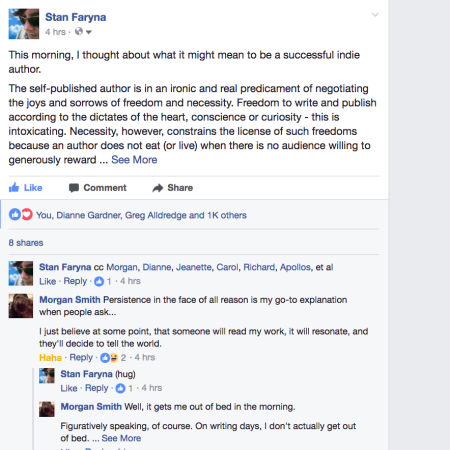
Start thoughtful (or exciting) conversations.
…
Time, design and technicalities
Doing things in an ok manner takes time (attention and work), design (money) and some awareness of the technical challenges and work arounds. A smart group will figure out ways to solve most of these challenges. For example, if a group can keep talented graphic designers and editors in paying work, they can negotiate lower rates. This is especially an important to do for getting graphics support and the development of generic graphics that everyone can use.
On the other hand, if everybody does their own thing in their own way, ain’t nobody got time for that. Literally. Ain’t nobody got time to market and sell books all by their uninformed and ornery lonesome.
Exercise Two
Do you want more blog posts about an online strategy for getting known as an author?
Here’s what I need to see to be convinced that this unpaid effort of mine is meaningful to you.
1. I need to see 30 or more comments on this blog post. Comment with a few words of thanks, ask a question, or give me intelligent heck with sufficient evidence of my error.
2. I need to see 30 additional shares of my pinned tweet for my YouTube reading of the Desiderata (link below) because 7000+ shares is not enough. [grin]
https://twitter.com/Faryna/status/526399279456591872
…
…
30 July 2017
Fairfax, Virginia
Fairfax, Virginia
…
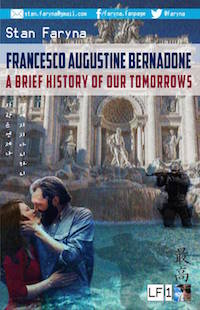
Have you heard about my novella, Francesco Augustine Bernadone?
“This fast and furious LitRPG, sci-fi book packs a punch like Saitama, the One-Punch Man, while giving us haunting glimpses of the near future and our existential predicament. With subtle hints of Dostoyevsky, Tolkien and The Walking Dead, this story is more delicious than the world’s greatest chimichanga. Sorry, Deadpool.”
– Yogizilla
…
49 Comments | Uncategorized | Permalink
Posted by Stan Faryna
Why did you publish a #zombie book?
July 27, 2017by Stan Faryna
…
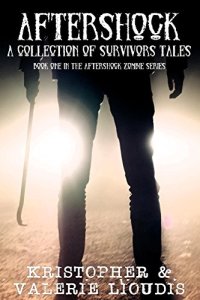
Valerie Lioudis, author of the zombie thriller, Aftershock: A Collection of Survivor Stories, asked me to write about how authors can use social media to market their books.
…
Valerie specifically wanted me to write for the authors that participate in the Reanimated Writers Zombie Fiction Fan Group on Facebook. I’m flattered by Valerie’s request and I hope I don’t disappoint her and Kevin. Because before I can get into the process and tasks, I have to get into the purpose. If the purpose and grit is lacking, there really isn’t any need to proceed further.
So I must ask you, fearsome author, why did you publish a book?
You published your book for it to be read, enjoyed and praised. By many. More than 100. Maybe, 5000. OR you have published a book for the wrong reasons.
Of course, many often say, just write. Others, write for yourself. In other words, write to understand you and, perhaps, benefit from truthful self-examination. Maybe you can fix you. Heal you. Find the path to a better you. Certainly, writing can help you do these things.
But once you have an ambition to publish your writing, you seek to be known. You seek to be trusted, preferred over others, honored, praised and otherwise rewarded. You want to matter to others. Me too.
Even if you possess talent, technique and style (however challenging they are for you to achieve in your work), these are not sufficient to get known. And, truth be told, a published book is not the accomplishment today that it was 100 years ago. In fact, anyone can publish a book today. And everybody seems to be doing it too!
Who will buy your book?
People need to see it to believe it. They need to believe it is worthy of their attention and time before they will taste it and see for themselves if it is good. Your book needs to be brought to market and it needs to succeed in a fierce competition among other books and, often, among better written books than yours.
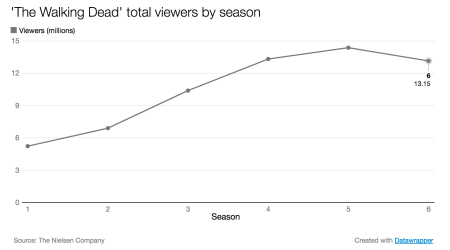
It’s great, for example, that the zombie market is huge. Last year, there were over 12 million total viewers of The Walking Dead. But how will your book get to that market of zombie fans?
Your book is competing for the attention of readers against 500,000+ new Indie books per year – not to mention all the books published by the industry leading publishers with their long experience and proven strategies for selling and marketing books. Today, an accomplishment is selling 5,000 or more copies within five years of publication.
Of course, there is some accomplishment in writing a book fit for publication. But the line between fitness and self-humiliation has been blurred much by the celebration of self-publication. And what self-respecting adult prizes a participation trophy?!
But those with purpose and grit will succeed in the serious accomplishment with a modest financial investment. Under $1200. Do not think, however, that it’s easy to compete against millions of dollars of marketing and ad spend of the top 20 publishers. That would be some really bad maths and poor common sense on your part!
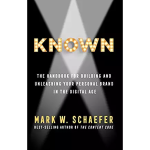
With much, enduring and persistent effort to market your books and build positive and mutually beneficial relationships in social media, you can become known. My friend, business professor and author, Mark Schaefer swears it in his best selling book, Known.
Building positive and mutually beneficial relationships may not be why you are on social media. It may not be how you do social media. That’s something we can easily fix if your purpose is to be an accomplished author.
…
Since I find that most learning is actually happening when there is doing, therefore, I will only continue to write further on this subject if I see 20 retweets and shares of both of the following tweets and posts. Even if there is not enough of you do so easily, encourage your friends to retweet and share. Because that’s how social media savvy is done.
Click the link below and retweet the tweet from your Twitter account.
https://twitter.com/Faryna/status/890376572481490947
Click the link and like and share the post from your Facebook account.
https://www.facebook.com/stan.faryna/posts/10155576931798415
…
26 July 2017
Fairfax, Virginia
…
Fairfax, Virginia
…
P.S. The conditions for a second blog post were met. Here’s the link to it:
…
Have you heard about my novella, Francesco Augustine Bernadone?
“This fast and furious LitRPG, sci-fi book packs a punch like Saitama, the One-Punch Man, while giving us haunting glimpses of the near future and our existential predicament. With subtle hints of Dostoyevsky, Tolkien and The Walking Dead, this story is more delicious than the world’s greatest chimichanga. Sorry, Deadpool.”
– Yogizilla
…
3 Comments | Advertising and Marketing, Blogosphere and Internet, Online Strategy (biz and politics), Uncategorized | Tagged: authors, books, marketing | Permalink
Posted by Stan Faryna
Nisha Varghese #50NewFeet
July 13, 2017by Stan Faryna
…
…
Nisha Varghese
…

In a recent blog post, Nisha Varghese unintentionally revealed her daily challenges as I reflected again on what this means as she types out her daily blog posts and fundraising tweets.
This morning I typed a Whatsapp message from my smartphone (because I have Cerebral Palsy I have poor fine motor skills which makes using things like a touchscreen a mammoth task) I feel a bit ridiculous celebrating a Whatsapp message but if you saw how much time and effort it took me to type a six letter word on my smartphone trust me you would be celebrating too.
Her fortitude to do good is not just admirable; it is nothing less than heroic and inspirational.
My subscribers should know who Nisha is and what she’s about. For those who don’t know about her: Nisha is a fundraiser for good causes. And her current campaign raises money for an organization that helps cure the condition of club feet in children around the world. Nisha explains it all on her campaign page here: https://www.crowdrise.com/50newfeet
Imagine how I feel when I get a personally typed message from Nisha – asking me to ask each of you to give $50 to her campaign – 100 of you. It may have taken her more than an hour to write those 200 words. Obviously, I can’t tell her no. But what an wonderful opportunity! I have to try. I have to put my words to good use. I have to put my writing to Nisha’s service – or I do not know love and, failing in this, I would have to confess that I have never known love.

None of which means that you are obligated by your own humanity to help me and Nisha with a $50 donation. But if you know love or say that you have known love, you might have to reblog this blogs post, share or tweet out the link, and/or give what you can. Or you could write a better blog post – one that better tells Nisha’s story and better explains her campaign.
12 July 2017
Fairfax, Virginia
3 Comments | Uncategorized | Permalink
Posted by Stan Faryna
Don’t give me an honest book review
May 28, 2017The problem with honesty
…
by Stan Faryna
…
…
As some of you know, I urgently seek book reviews on Amazon.com for my debut book, Francesco Augustine Bernadone as I compete for a finalist position for Amazon’s 2017 Storyteller contest. Over the years, I have given and received reviews on products, services and other things. This blog post serves for reflection on what makes a review, relevant, meaningful and useful.
…
Please don’t give me an honest book review. Be truthful, start a new conversation with me, and be an encouragement that I will take to my heart. Don’t be the problem. There’s too much misunderstanding, discouragement, indifference, envy, contempt, violence, pain and hate in the world. Let us endeavor not to add to it.
Lest we destroy the world, each other and our selves.
What is truth?
Truth is not just your or my view of the facts. It’s not just being honest and saying whatever flips off the tongue, pen or keyboard. Today, honesty suggests expressivity but speech itself is not the arbiter of what is right or wrong, beautiful or evil…
In fact, careless, quick and self-serving speech causes a lot of pain in this world.
We all know too well that kind of honesty that destroys marriages, friendships, families, teams, communities, nations…
Unlike a mere exercise of expression, Truth is inseparable from beauty, goodness, love, patience, kindness…
Truth is a two-way blessing, liberator and boon. Write that kind of review. Be that kind of reviewer.
All of the time it will take to write a truthful review (and truthful reviews take time to write with head and heart) is an investment that will receive a return on investment by ten times or more.
Truth is profitable but honesty will put you into debt and in the way of destruction.
28 May 2017
Fairfax, Virginia
…
___________________________________________________________________________

Francesco Augustine Bernadone
by Stan FarynaZombies stalk the streets, greedy tour guides prey on noobs and old men are filled with long-odds hope in this disturbingly brilliant short story by first-time author Stan Faryna.

6 Comments | Uncategorized | Permalink
Posted by Stan Faryna
Sample Chapter from my debut, new, Indie Science Fiction-LitRPG book: F.A.B
May 24, 2017Sample Chapter from my new Science Fiction-LitRPG book: Francesco Augustine Bernadone: A Brief History Of Our Tomorrows
You can get my little book here:
https://www.amazon.com/dp/B071S75DWB
Chapter Two
14 days ago
Rome, Italy
Francesco knelt in a stall as he rigorously cleaned the toilet bowl with a brush. Standing behind him, a short, fidgety man in a black suit held a box in his arms.
“I regret to inform you that we can’t keep you, Mr. Bernadone. We have half the student registrations this year than previous year registrations. The budget is a mess. I am relieving you of your janitorial duties immediately.”
Francesco stood up in his gray overalls and the short administrator quickly stepped back.
“Awesome,” replied Francesco in a sad whisper.
The little man handed him the box and Francesco looked in it to see that his personal things had been collected from the school’s basement: a framed picture of his wife and son, a bible, a pill organizer and a crumpled lottery ticket.
There would be no pleasantries – not even a farewell hand shake after ten years of exceptional performance.
“Mi Dispiace…” The administrator shrugged.
Francesco acknowledged the insincere apology with courtesy.
“Before you go, would you fix a faucet in the faculty restrooms?” asked the small man.
“Si.” Francesco handed the toilet brush to the administrator. The short man received it with a sour face.
This was the third of Francesco’s three part time jobs that he had been fired from in the same week. Times were hard and employment of the elderly was increasingly discouraged. Just last week, the Italian Prime Minister had called upon the nation to employ its youth.
…
Francesco carried the box under his arm as he walked out of the college’s front door. He wore a gray suit. It was very important to Clare that he dress respectably – regardless of his station. After all, Francesco Bernadone was an educated and cultured gentleman. This – none could take from him.
A male college student ran up to Francesco and thanked him for fixing his bicycle the other day. As the young man patted Francesco, he stuck a placard on Francesco’s back:
Attenzione: The Walking Dead
Down the street, a group of teenage Sudanese immigrants laughed at Francesco and imitated staggering zombies as they followed him to the bus stop.
“They’re going to eat us alive,” said an elderly Jewish man with a modest black kippah. He had caught up with Francesco, removed the placard from his back and handed it to him. “Because they are, in fact, the zombies – not us. They consume everything in their path. Like locusts!”
Francesco took the placard, read it and smiled. He held out his hand in friendship.
“Grazie.”
The man shook Francesco’s hand and turned to go in another direction. Some steps away, the Jewish man turned his head to Francesco and spoke out.
“We got to stick together. Otherwise, they’ll put us in furnaces – the elderly, the sick and the disabled. It’s been done. It will be done again…”
…
On the bus, Francesco listened to a twenty-something Asian man in jeans, navy blue sport jacket, and white tee shirt. The young man carried a metallic-canvas back pack and wore matching combat boots. He was speaking about the challenges of molecular computing with a middle-aged Caucasian man in a white, three-piece suit. The topic was interesting to Francesco – even more interesting than the fact that the man in the white suit had no shoes.
“I really do think self-assembling, silver composite nanotubes are the answer to multi-threading the organic transistor,” said the young Asian man.
“And if you’re wrong, Thomas…” The barefooted man drew an invisible cut across his own throat. “That’s 10 billion UNITs down the drain – an unacceptable loss for TENsky. I’d have to take a pound of flesh out of you…”
Francesco got off at his bus stop, walked a few blocks, waved and smiled to various adults and children, entered his apartment building, and went up the abused stairwell to the sixth floor. Above the door to his apartment was a wrought iron sign holder minus the sign. At the foot of the door lay a newspaper. He unlocked the door, picked up the newspaper and went into the quiet darkness.
A small, mechanical white cat waved to him from atop a curio cabinet. He didn’t turn on the lights as his neighborhood was load-sharing – the electric supply was suspended for three hours as the utility juggled the electrical needs of the neighborhoods of Rome.
In the kitchen, he turned on a solar-charged radio, opened a can, and put food in two cat dishes. A female radio announcer spoke about the top news of the day.
Today, 72 civilian ships were scuttled while docked at the Port of Algiers. It is well documented that the boats were all used in illegal immigration operations in the last month. The Algerian government blames these acts of terrorism on joint special ops teams operating under the command of the European Military Protectorate and NATO. No one was injured in the incidents. One Netherlands national was captured by Algerian authorities and is being held in custody as a suspect.
In other news, Wikileaks released a dozen, separate incriminating videos of Chief Economist and Senior Vice President of The World Bank Lady Grey engaging in heinous sexual acts with male and female children under the age of 11…
The news faded as Francesco surveyed 12 small picture frames hung on one wall – different scenes of Clare, Cristiano and him. He missed his wife and son.
What am I going to do?
His mobile phone beeped and whirred with an R2D2 ringtone.
“Pronto!”
“Francesco! Bring avocados, bananas and raw milk when you visit Clare tomorrow morning,” explained a woman. “I’m thinking a smoothie for her and mom might be a cooling, anti-inflammatory pick-me up for their afternoon refreshment.”
“I’ll do it,” replied Francesco.
“Another thing,” the woman added with sadness. “Clare isn’t doing so well. I’m sorry, Francesco. On a level of 1-10, her pain is 13, constantly. I suspect the cancer has spread to several organs.”
Francesco closed his iPhone and tried to put it back in his front pants pocket, but failed and it hit the floor. The screen cracked. He took a deep breath.
Then he opened the folded newspaper to the front page and read the headlines:
You Won’t Believe The Money Making In That Zombie Apocalypse Game
Pope Authorizes Trained Laity To Use Formal Rites of Exorcism
Experimental Cancer Treatment Boasts 5% Success For Terminal Patients
66% Unemployment: Time For A Hail Mary As The Americans Used to Say
6x PVP Champion John Dionysius Ranks Up to No. 1 in Jacob’s Trouble
Grand Solar Minimums, Coronal Holes, and Earthquake Correlations
Are UNITs A Better Currency? Remembering The Dollar And The Euro
Leave a Comment » | Uncategorized | Tagged: Francesco Augustine Bernadone | Permalink
Posted by Stan Faryna
New LitRPG Short by Stan Faryna
May 22, 2017by Stan Faryna
…[youtube
___________________________________________________________________________________________
Book Announcement
___________________________________________________________________________________________
In 2026, hundreds of millions of gamers hustle in an epic, virtual reality to win real cash prizes. Zombies, ruthless players, scarce resources and menacing artificial intelligence are just a few of the challenges in ‘Jacob’s Trouble’, where less than one in a thousand manage to level up, grind for gear and avoid permadeath in order to loot hidden treasures and find life-changing wealth.
Recently unemployed, Francesco sells his father’s legacy, a Rolex watch, for guidance in the game. Caught up in the naive hope he’ll win the prize money for an experimental, nanobotic cancer treatment for his wife, the ex-janitor begins an adventure that offers all the promise of redemption, but far greater challenges than he ever realized.
Can Francesco, an eighty-year-old non-gamer, find windfall and fortune in this dark and dystopic virtual reality game? Zombies, guns, machetes and death in a game might seem inconsequential, but the cost of failure is a reality this elderly man can not bear.
Get Francesco Augustine Bernadone at Amazon:
https://www.amazon.com/Francesco-Augustine-Bernadone-Tomorrows-Bucharest-ebook/dp/B071S75DWB/
19 May 2017
Fairfax, Virginia
___________________________________________________________________________________________
Recommended reading for trips to the beach or park, coffee shop stalking, lunch hours, lazy afternoons, white nights, and public transit such as planes, trains, buses and ferry. It also makes an excellent gift for those who do those things.
This story may be most appreciated by those who enjoy works by the following authors: Ernest Cline, John Wesley Rawles, Paulo Coehlo, Gabriel García Márquez, Frank Herbert, Le Guin, P.K. Dick, Derek Prince, G.K. Chesterton, Tolkien, C.S. Lewis, Gabriel Honoré Marcel, Robert Hugh Benson, Kierkegaard, Steinbeck, Solovyov, Zora Neale Hurston, Dostoyevsky, Shakespeare, Cervantes, Dante, Aquinas, Augustine, and Homer.
___________________________________________________________________________________________
Categories: Science Fiction, LitRPG, Post-apocalyptic, Futurism, Babyboomer Lit, Young Adult, Adventure, Horror, Spirituality, Romance, Speculative Future History, TV Movie Game Adaptation, Supernatural, Men’s Studies, Inspirational, Dark Fantasy, Climate Change, Economics
Topics: Video Games, Zombies, Virtual Reality, Artificial Intelligence, Dystopian Future, Futuristic Predictions, World Currency, Bitcoin, Human Dignity, Disability, Ad Tech, Internet Culture, Digital Divide, Climate Change, Manliness, Technology, MMOs
Leave a Comment » | Uncategorized | Permalink
Posted by Stan Faryna
Female leads, Aye and Amen
September 20, 2016Female leads, Aye and Amen
…
by Stan Faryna
…
…
Below are my expanded comments to a Geeks Under Grace essay about female leads here:
http://www.geeksundergrace.com/christian-living/divisive-problem-female-leads/
Wonderfully Made
As the author suggests, manipulative and insincere marketing strategies are hardly an answer to the very real disparities and problematics which consume gender politics. In fact, they tend to be offensive and degrading as she illustrates in her ponderance of Final Fantasy X2. It’s not helpful to us in understanding a holy vision of the profound human context in which we participate. God blesses us, male and female, and God calls us, male and female, to be wonderful, powerful and holy.
In Genesis 1, it is written…
27 God created man in His own image, in the image of God He created him; male and female He created them. 28 God blessed them; and God said to them, “Be fruitful and multiply, and fill the earth, and subdue it; and rule over the fish of the sea and over the birds of the sky and over every living thing that moves on the earth.”
Righteousness
Aside, I find the pejorative term, Social Justice Warrior, to be problematic. As if there was something wrong with “social justice” per se. Social Justice has long and rightly been a concern of the Christian church and the individual Christian.
Of course, the ungodly vision of social justice is problematic – wrongs are advanced as rights and confusions are settled with a count of the feels as opposed to the judgment of reason. But, surely, the righteousness which causes God joy includes a social justice in which we care for one another – especially those in most need. The example of the Good Samaritan was not spoken as a bed time story. It was not spoke for our entertainment.
In the Bible, the care of orphans and widows is a critical component of true religion and accounted as righteousness. In James 1:27, it is written:
Pure and undefiled religion in the sight of our God and Father is this: to visit orphans and widows in their distress, and to keep oneself unstained by the world.
In Proverbs 31, an excellent woman is also described (in part) as a social justice warrior.
20 She extends her hand to the poor,
And she stretches out her hands to the needy.
Job was among the few men in the Bible who were described as righteous in the eyes of the Lord (Job 1.1). Job was a social justice warrior. We read his own account of his righteousness in Job 29:11-17:
11 “For when the ear heard, it called me blessed,
And when the eye saw, it gave witness of me,
12 Because I delivered the poor who cried for help,
And the orphan who had no helper.
13 “The blessing of the one ready to perish came upon me,
And I made the widow’s heart sing for joy.
14 “I put on righteousness, and it clothed me;
My justice was like a robe and a turban.
15 “I was eyes to the blind
And feet to the lame.
16 “I was a father to the needy,
And I investigated the case which I did not know. 17 “I broke the jaws of the wicked
And snatched the prey from his teeth.
And I investigated the case which I did not know. 17 “I broke the jaws of the wicked
And snatched the prey from his teeth.
Woman
Perhaps, we need to ponder, reflect and dream of what might be a true, encouraging uplifting vision of a dignified, excellent and holy woman – a vision which illuminates what empowerment, inclusivity and celebration of woman should look like.
For the Christian, Mary, mother of Jesus, is the crowning glory of woman. And man. The Magnificat (Luke 1:46-55) is a confession and example of human faith that illuminates the life of the Christian to the Christian, him- or herself.
46 And Mary said, “My soul magnifies the Lord,
47 and my spirit rejoices in God my Savior,
48 for he has looked on the humble estate of his servant.
For behold, from now on all generations will call me blessed;
49 for he who is mighty has done great things for me,
and holy is his name.
50 And his mercy is for those who fear him
from generation to generation.
51 He has shown strength with his arm;
he has scattered the proud in the thoughts of their hearts;
52 he has brought down the mighty from their thrones
and exalted those of humble estate;
53 he has filled the hungry with good things,
and the rich he has sent away empty.
54 He has helped his servant Israel,
in remembrance of his mercy,
55 as he spoke to our fathers,
to Abraham and to his offspring forever.”
Among the most profound questions the Christian must ask his- or herself:
Does your soul magnify the Lord and rejoice in God the Savior?
Also worthy of our good study of woman is the description of the excellent wife in Proverbs 31:10-31. She is not foolish, clumsy, useless, careless, weak, incompetent, stupid, capricious, violent, etc. She is valuable, powerful and wonderful.
10 An excellent wife, who can find?
For her worth is far above jewels.
11 The heart of her husband trusts in her,
And he will have no lack of gain.
12 She does him good and not evil
All the days of her life.
13 She looks for wool and flax
And works with her hands in delight.
14 She is like merchant ships;
She brings her food from afar.
15 She rises also while it is still night
And gives food to her household
And portions to her maidens.
16 She considers a field and buys it;
From her earnings she plants a vineyard.
17 She girds [l]herself with strength
And makes her arms strong.
18 She senses that her gain is good;
Her lamp does not go out at night.
19 She stretches out her hands to the distaff,
And her hands grasp the spindle.
20 She extends her hand to the poor,
And she stretches out her hands to the needy.
21 She is not afraid of the snow for her household,
For all her household are clothed with scarlet.
22 She makes coverings for herself;
Her clothing is fine linen and purple.
23 Her husband is known in the gates,
When he sits among the elders of the land.
24 She makes linen garments and sells them,
And supplies belts to the tradesmen.
25 Strength and dignity are her clothing,
And she smiles at the future.
26 She opens her mouth in wisdom,
And the teaching of kindness is on her tongue.
27 She looks well to the ways of her household,
And does not eat the bread of idleness.
28 Her children rise up and bless her;
Her husband also, and he praises her, saying:
29 “Many daughters have done nobly,
But you excel them all.”
30 Charm is deceitful and beauty is vain,
But a woman who [s]fears the Lord, she shall be praised.
31 Give her the [t]product of her hands,
And let her works praise her in the gates.
And then there is Mother Theresa – her memory and service is honored by many peoples and peoples of many faiths. But even Mother Theresa is not the last word on the wonder that is woman. Check out Nisha Varghese who says to women and girls: “you are more than the sum of your body parts.”
The historical and modern example of excellent and talented women, in fact, is in no short supply as I have written elsewhere: The Wonder That Is Woman. But, sadly, our attention to them is deficient. Let us, each of us, repent of our negligence. And let this be my repentance for my own negligence.
20 September 2016
Fairfax, Virginia
Leave a Comment » | Uncategorized | Permalink
Posted by Stan Faryna
ReElise: A retro, Hip Hop, Christian RPG
August 31, 2016ReElise: A retro, Hip Hop, Christian RPG Game
…
by Stan Faryna
…
…
12 hours and counting.
The clock is ticking for Justin Fox’s Kickstarter campaign. The backing is no where near the funding goal for this game. For more than a week, Yomar Lopez has been working hard to rustle up some love across the internets for Justin’s campaign. But Yomar’s not getting the feels – especially from the Christian crowd. Yomar asks with not a little frustration and confusion: “What’s up with that?!!”
Justin’s Kickstarter campaign is more than a dream. It’s a prophetic vision. He even quit his day job – not to mention he’s been working on ReElise for more than a few years. The hand-illustration work has been (and is) challenging to say the least. With 12 hours left on the Kickstarter campaign and many tens of thousands of dollars short of the goal, however, Justin is not discouraged.
ReElise is a game that will be made. One way or another. Period.
The game is about Elise, a young African-American woman who has escaped the hell of human trafficking. The game begins in a dark place. It begins at the heart of a painful human drama. It’s a shocking and emotional ride. It’s a game experience that would not easily be forgotten. It could even become a cult classic.
Blood and violence? It is in there. There’s fights. Elise – she reminds me of Michonne from The Walking Dead. Unstoppable! And, maybe, there’s redemption too.
How is that Christian?!
Ask Justin. He’ll tell you with his own words. Maybe, he’ll speak in tongues with you.
And, yeah, you could be on the right side of history – if you stand with Justin. Share this blog post or a link to Justin’s Kickstarter campaign. Or back it. I’m a backer. I’m in for $100. You?
http://www.kickstarter.com/projects/reelise/reelise-the-hip-hop-2d-christ-based-rpg-for-gamers
13 August 2016
Fairfax, Virginia
5 Comments | Uncategorized | Permalink
Posted by Stan Faryna
I’m like a bird
October 22, 2015I’m like a bird
…
by Stan Faryna
…
I hated the song. Nelly Furtado’s song, I’m Like a Bird. I especially hated the chorus. And it played everywhere. They played it in the night clubs, the taxis, MTV and, yeah, everywhere. It was inescapable for a time in the wild west of Bucharest.
I’m like a bird
I’ll only fly away
I don’t know where my soul is (soul is)
I don’t know where my home is
And baby all I need for you to know is
I’m like a bird
I’ll only fly away (I don’t know)
I hated the chorus because it meant nothing was forever. Because there was no commitment. Because there was no forever and always. And I was fighting for these things.
I was fighting for the world and the people written upon my heart. I was surrounded by enemies on all sides like Odysseus at the Trojan beach. I was cut and pierced by swords, losing blood, and my legs were so tired they burned. I was like a bear fighting for higher ground – fighting a sea of snarling and barking dogs.
The burns on the kitchen floor of the apartment in the Sturdza palace looked like the stripes on a tiger – lit cigarettes rolled out of my hands as I slept and woke in five minute cycles through the night as I tried to figure out how to rule the world.
Some years later, Nelly Furtado’s song, Say It Right, would prepare me for divorce. The song was also inescapable.
Oh you don’t mean nothing at all to me
No you don’t mean nothing at all to me
But you got what it takes to set me free
Oh you could mean everything to me
I was crawling on raw hands and knees, blind and broken. I could not carry the burden and the shame of her further.
I have to say I’m not a fan of Nelly Furtado. The lyrics aren’t brilliant. Nor the music. That’s my opinion and opinions, even mine, don’t really amount to much.
I happened to hear Nelly’s song again this morning, I’m like a Bird.
And I find myself a little more like that bird that I hated. Because I fly. Away. And yet I find this liberating as both apology and as an affirmation of my spirit.
Unlike Nelly, I know where my soul is. I know where my home is. But it is not a where. It is a Who.
Holy, Holy, Holy are you, God.
22 October 2015
Fairfax, Virginia
Leave a Comment » | Upfront and Personal | Permalink
Posted by Stan Faryna


 Follow me on Twitter: @Faryna
 The unofficial blog of Stan Faryna